
Film der ændrer verden

Jeg har siden jeg var en lille dreng der lavede smalfilm med min bror, været fascineret af filmmediet.
Hvad film ikke indeholder af potentialer til at skabe nye forståelser for virkeligheden!
Tænk på film som Giganten, Vredens Druer, Rumrejsen 2001, Alle Præsidentens Mænd, The Matrix, Interstellar… Hvem kan måle hvilken effekt, de har skabt i vores kollektive bevidsthed og vores syn på samfundet?
Brugen af film i vores samfund er stadig på neanderthal-stadiet og der er brug for folk med noget på hjerte og som kan bruge håndværket til at udvide vore andres horisonter.
Jeg har ikke kunnet lade være med selv at bruge mediet i vores egen virksomhed. Lige nu bruger vi det til at lave korte 30 sekunders portrætfilm ved at filme mennesker som arbejder i affaldssorterings-branchen (fx ’skraldemanden’, ’viceværten’, ’fabrikanten der laver dine dåser om til cykelringeklokker’), for at kanalisere video-portrætterne og deres ytringer om, hvorfor det er vigtigt at sortere affald, ud til udvalgte borgere i en test for at få dem til at affaldssortere. På den måde udsætter vi borgere for en virkelighed de er en del af, men som de aldrig selv ser.
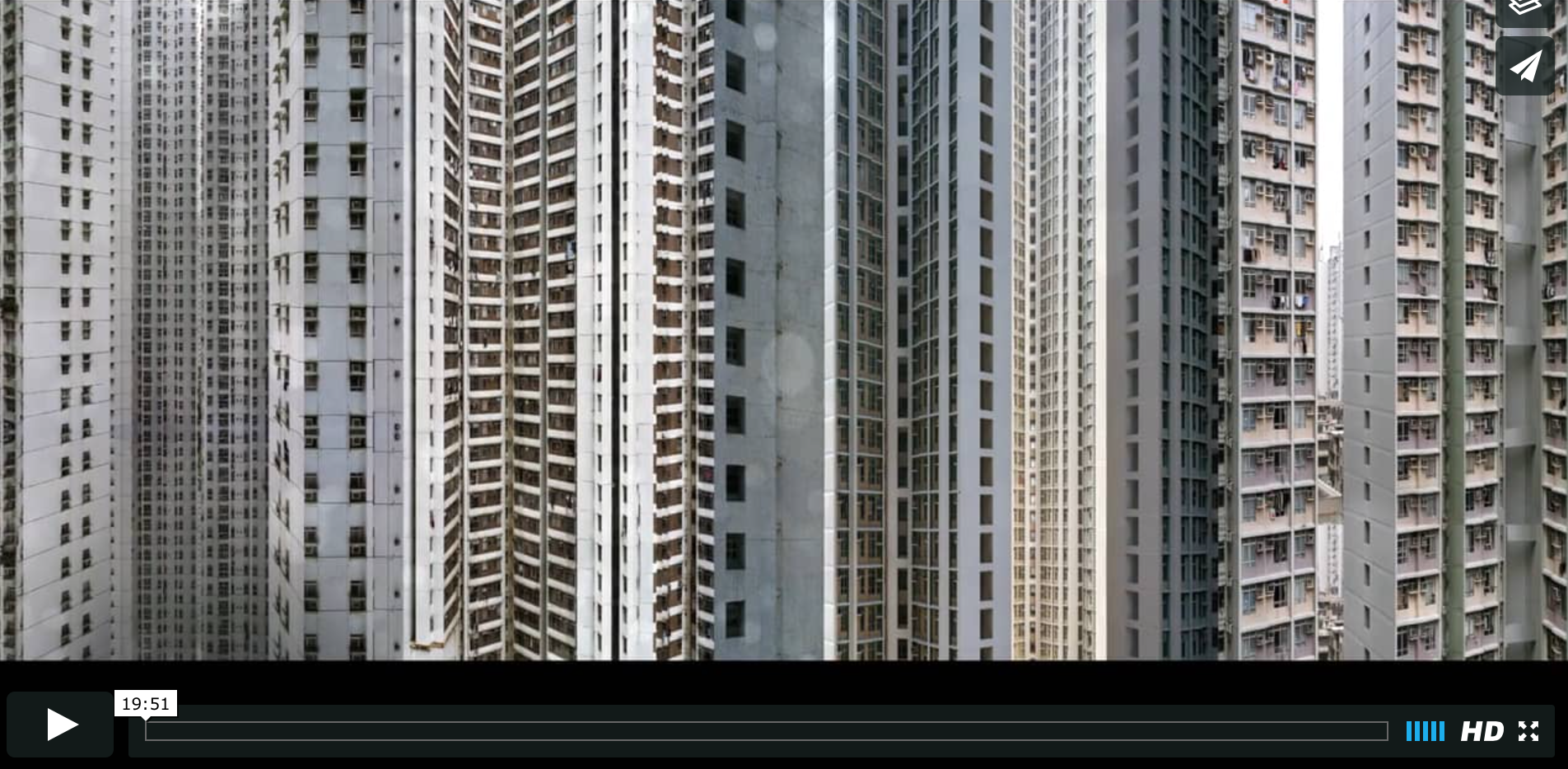
Indtil videre har vores egen krone på filmværket været at lave en 18 minutters film om Gehl Architects arbejde og livssyn som blev vist på Louisiana Museum of Modern Art og på Venedig Biennalen. Og for nylig er den blevet vist til IKEAs årlige interne konference i Älmhult om fremtidens boligformer. Vi fik for nylig støtte fra Realdania til at lave den 24 meter lange installation om til et almindeligt skærmformat, så alle kan se den. Vil du se den, kan du se den her:
Én af de personer jeg selv følger i filmens verden, er Werner Herzog.
Som etnolog er han jo en mageløs karakter i filmbranchen.
Det er Herzog der er bagmanden for dokumentaren om bjørnetæmmeren der ender med selv at blive spist, træskæreren som bliver skihopper, kvinden der nødlander i junglen, overlever og finder selv ud og dokumentaren om livet under Antarktis. Hans seneste film handler om teknologi og inkluderer interviews med blandt andet Elon Musk. Derudover har han lavet fiktionsfilm blandt med skuespillere han hypnotiserede.
Herzog kan om nogen finde det mytologiske frem i hverdagshændelser og lave det om til bevægelige billeder med sit filmkamera. Laterna Magica.
I en samtale-bog der for nylig udkom, har jeg her udplukket 18 citater fra Herzog, som selvom man ikke er interesseret i film, kan være inspirerende for at huske at vedholde en stædig interesse og – ikke mindst – udføre og skabe det, man brænder for.
18 pointer fra Werner Herzog:
- From Fellini: ”Fiction may have a greater truth than everyday, obvious reality”. Fiction reveals truth that reality obscures.
- I’m fascinated by the notion of civilisation as a thin layer of ice resting upon a deep ocean of darkness and chaos.
- Years ago Twentieth Century Fox was interested in working with me on Nosferatu. The studio executives asked me to travel to Hollywood for a meeting and offered me the use of a mansion so I could sit and write the script. I didn’t particularly want to go, so I invited them to Munich instead. It was almost a test to see how serious they were about the project. One freezing winter morning I met four men – all wearing suits and ties and carrying fancy briefcases – at the airport, and after squeezing them into my Volkswagen drove into the Bavarian countryside. They talked about ”financing” a number of screenplays. I didn’t understand what they were talking about. ”How much do you need?” they asked. ”It will take me a week and cost 1.50 dollars for a hundred sheets of paper,” I said. ”Perhaps another dollar for a few pencils.” They looked at each in bewilderment.
- They have a beautiful expression in Peru: ”Perseverance is where the gods dwell.
- The Greeks had a saying: ”A captain only shows during a storm.”
- There are some mysterious moments in the film, but I couldn’t really tell you how they explain Stroszek’s actions. In one scene he sits on the quay with some boys, one of whom say – for no apparent reason – ”Now that I can talk, what shall I say?” before staring directly into the camera.
- I have never wanted to see an actor weep. I want to make the audience cry instead.
- We grow up enveloped by fifteen-second storytelling and are conditioned by filmmaking at breakneck pace. Decades from now, our great-great-grandchildren will look back with amazement at how we could have allowed a precious achievement of human culture like storytelling to be so disrespected, infected, then shredded by advertisements. It will be the same amazement we feel today when we look at our ancestors, for whom slavery, capital punishment, the burning of witches and the Inquisition were acceptable events. We will be blamed for having not thrown hand grenades into television stations and laying waste to their institutionalised cowardice, for not taking up arms and occupying such debased places which venerate that single, pernicious god: the Einschaltquote, the ratings.
- Our culture today, especially television, infantilises us. The indignity of it kills imagination. May I propose a Herzog dictum? Those who read own the world. Those who watch television lose it.
- I’ll repeat it again as long as I’m able to: we will die out like dinosaurs if we don’t develop adequate images. We need to learn to adapt our visual language to new and unforeseen situations. If our ingenuity isn’t up to the task, if we aren’t able to create fresh images, we will be stunted in our growth, unable to face the unforeseen challenges charging at us. All to many images are at a standstill, and consequently meaningless.
- Intensity wins the battle, not the strength in numbers.
- I think it was Archimedes who said it’s possible to hoist the earth off its hinges if you have a pivotal point and lever sticking far enough out into the universe.
- Nietzsche tells us that ”All writing is useless that is not a stimulus to action”.
- If you watch Fitzarraldo and have the courage to push on with your own projects, then the film has accomplished something.
- My film school would allow you to experience a certain climate of excitement of the mind, and would produce people with spirit, a furious inner excitement, a burning flame within. This is what ultimately creates films. Technical knowledge inevitably becomes dated; the ability to adapt to change will always be more important.
- When the system doesn’t respond, when it doesn’t accept what you’re doing – and most of the time it won’t – you have to become self-reliant and create your own system.
- Always take the initiative. There is nothing wrong with spending a night in a jail cell if it means getting the shot you need. Send out all your dogs and one might return with prey. Beware of the cliché. Never wallow in your troubles; despair must be kept private and brief. Learn to live with your mistakes. Study law and scrutinize contracts. Expand your knowledge and understanding of music and literature, old and modern. Keep your eyes open. That roll of unexposed celluloid you have in your hand might be the last in existence, so do something impressive with it. There is never an excuse not to finish a film. Carry bolt cutters everywhere. Thwart institutional cowardice. Ask for forgiveness, not permission. Take your fate into your own hands. Don’t preach on deaf ears. Learn to read the inner essence of a landscape. Ignite the fire within and explore unknown territory. Walk straight ahead, never detour. Learn on the job. Maneuver and mislead, but always deliver. Don’t be fearful of rejection. Develop your own voice. Day one is the point of no return. Know how to act alone and in a group. Guard your time carefully. A badge of honor is to fail a film theory class. Chance is the lifeblood of cinema. Guerrilla tactics are best. Take revenge if need be. Get used to the bear behind you.
- Fifity years ago, when I walked out of the office of those pompous producers and established my own production company, I knew I would never shoot a single frame of film if I continued wasting my time with such people. If you want to make a film, go make it.
- - -
Læs tidligere blogs her:
http://borsen.dk/opinion/blogs/author/7231180/tobias_lau.html
- Adam Estrup
- Alexandra Krautwald
- Anne E. Jensen
- Anne H. Steffensen
- Annette Franck
- Bo Bejstrup Christensen
- Bo Overvad
- Britta Schall Holberg
- Carl Holst
- Carsten Boldt
- Caspar Rose
- Casper Hunnerup Dahl
- Cecilia Lonning-Skovgaard
- Christian Engelsen
- David Munk-Bogballe
- Eelco van Heel
- Eric Ziengs
- Erik Høgh-Sørensen
- Esther Dora Rado
- Frank Lansner
- Gitte Winther Bruhn
- Hans Fogtdal
- Helge J. Pedersen
- Henriette Kinnunen
- Henrik Franck
- Henrik Funder
- Imran Rashid
- Jan Al-Erhayem
- Jan Bau
- Jens Balle
- Jens Ole Pedersen
- Jesper Boelskifte
- Johan Hygum Hillers
- Kaj Høivang
- Karim Ben M'Barek
- Karl Iver Dahl-Madsen
- Katerina Pitzner
- Keld Zornig
- Kersi F. Porbunderwalla
- Kim Ege Møller
- Kim Pedersen
- Kim Rud-Petersen
- Klaus Lund
- Knud Erik Andersen
- Kristian Hansen
- Lars Barfoed
- Lars Sander Matjeka
- Lars-Christian Brask
- Lasse Birk Olesen
- Line Rosenvinge
- Lisbet Røge Jensen
- Mads Lundby Hansen
- Martin Rasmussen
- Mette de Fine Licht
- Mette Mikkelsen
- Michael Stausholm
- Michael Winther Rasmussen
- Michael Winther Rasmussen
- Mikkel Grene
- Mikkel Krogsholm
- Mikkel Kruse
- Morten Sehested Münster
- Nikolaj Stenberg
- Nils Thygesen
- Per Hansen
- Richard Quest
- Rune Wagenitz Sørensen
- Steen Bech Andersen
- Steen Thomsen
- Steffen Hedebrandt
- Stina Vrang Elias
- Susanne Møllegaard
- Susanne Møllegaard
- Teis Knuthsen
- Thomas Harr
- Tim Vang
- Tobias Lau
- Torben Tolst
- Torsten Grunwald
- Tove Holm-Larsen
- Ulrik Heilmann
- Yasmin Abdel-Hak